Planning
Why Fall Is a Good Time to Plan a Spring Patio
The best spring projects start before the weather turns. Here’s why fall is the ideal season to design, choose materials, and get a patio ready to build—without the rush.
By Regan Hutson5 min read
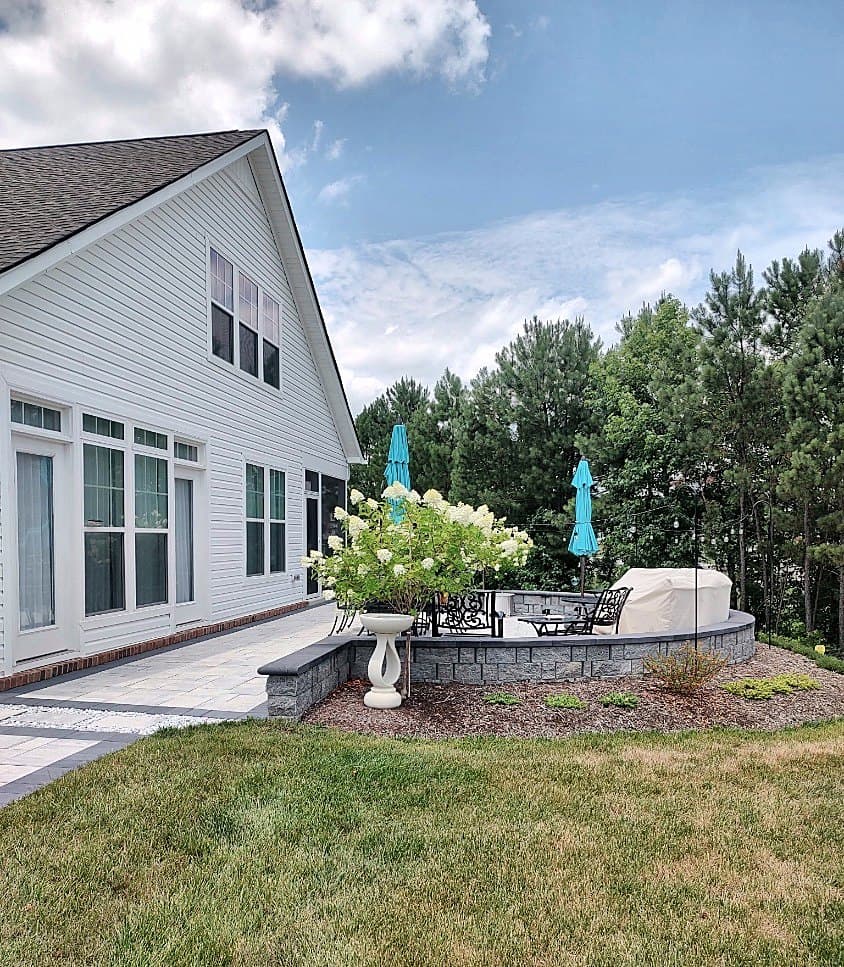
Most people start thinking about a new patio when the weather warms up. The first nice weekend of spring arrives, the backyard looks a little tired, and suddenly everyone on the street wants the same thing at the same time.
There is a better way to approach it. Fall is one of the best times to plan a spring patio—not because the work itself is rushed into the colder months, but because the thinking, the decisions, and the details get the time they deserve.
The Spring Rush Is Real
When the weather turns, homeowners across Greater Richmond start calling about patios, walls, walkways, and fire pits at roughly the same time. Designers, crews, and suppliers all feel that demand at once.
Projects that begin in spring often start with questions that should have been answered months earlier: How big should the patio be? Where does the fire pit go? Which paver color works with the house? Those decisions are important, and they are harder to make well when you feel like you are already behind.
The best outdoor projects are rarely the fastest to decide. They are the ones where every decision had time to settle.
Design Without the Pressure
A good hardscape starts with how you want to live outside, not with a material catalog. Fall gives you time to think about the questions that actually shape a design:
- How many people do you want to seat for dinner? For a gathering?
- Do you want a fire feature, a dining area, or both?
- Where will people walk between the house, the yard, and the driveway?
- Which views from inside the house matter most?
- Is there anything you might add later, like lighting, a kitchen, or a shade structure?
Answering these questions slowly almost always leads to a better plan. Layouts can be sketched, revised, and walked on the actual site. Furniture can be measured. Ideas can be tried and set aside without pressure.
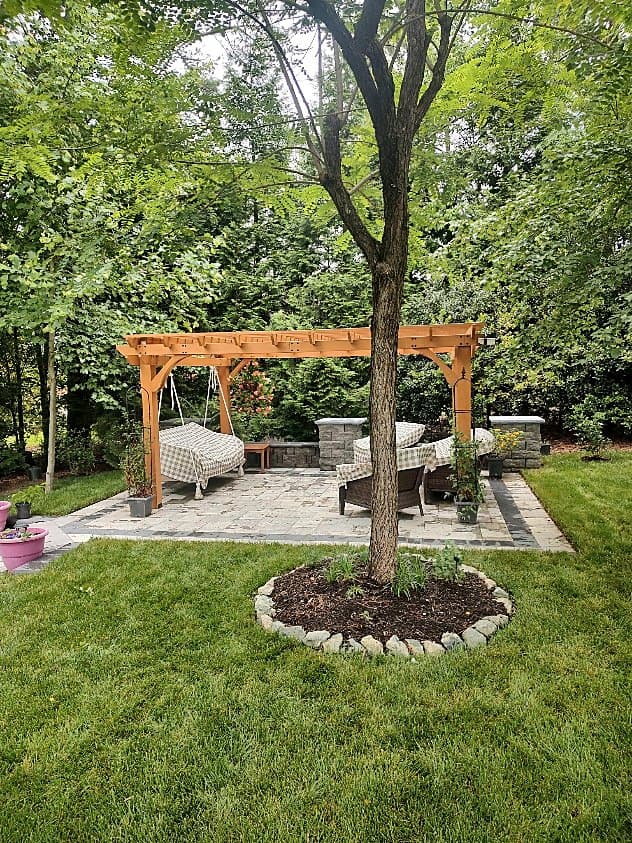
For more on fitting a patio to your home's architecture, read Designing a Hardscape That Looks Like It Belongs With the House.
See Your Yard as It Really Is
Summer can hide a lot. Full leaf cover, dry ground, and long days make almost any yard look easy to work with.
Fall and winter tell a more honest story. Steady rain shows where water collects and which way it runs. Bare trees reveal how much sun the space really gets and where roots and canopies may affect construction. Soft or muddy areas point to grading questions that need answers before a patio goes in.
Water is the quiet factor behind most hardscape problems, so it belongs at the start of the plan. Learn more about how we approach drainage as part of a project.
Make Material Selections With Care
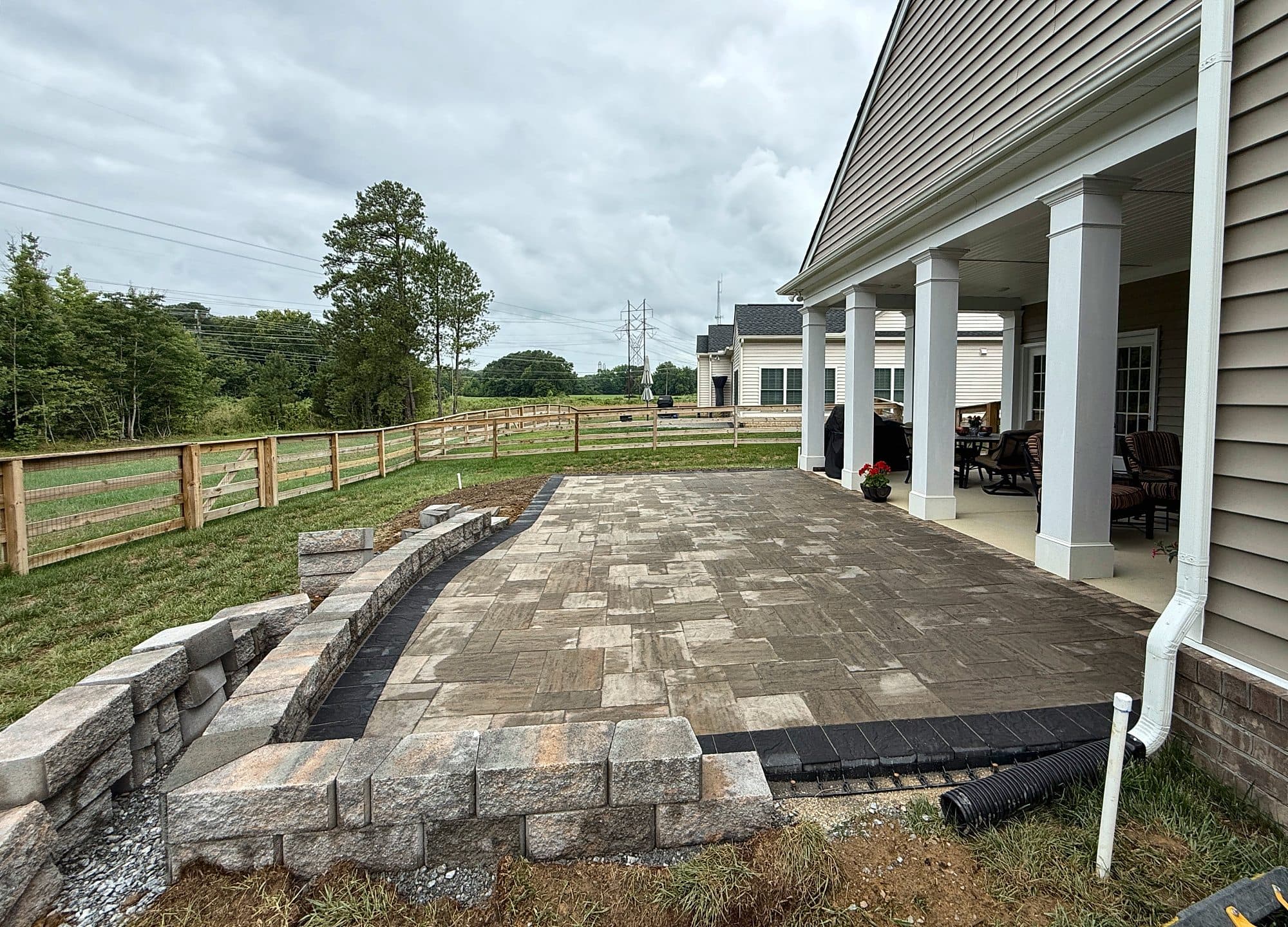
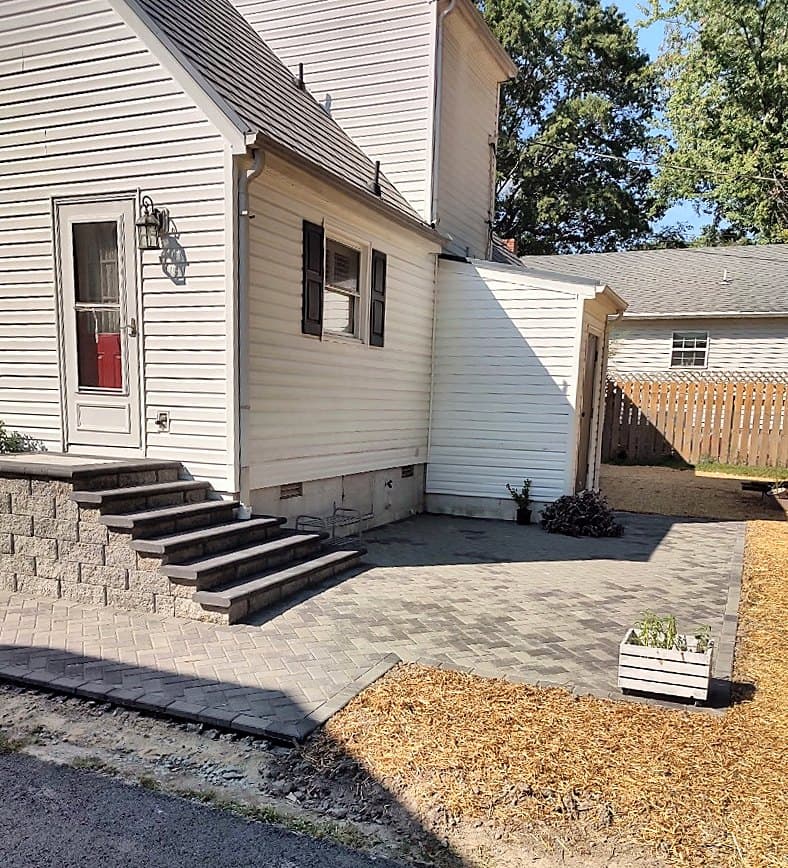
Pavers, natural stone, wall block, caps, and borders all look different outdoors than they do in a showroom or online. Color shifts with sunlight, shade, the siding and roof of your house, and even the time of day.
Planning in the fall gives you time to:
- Look at physical samples at your property, not just photos
- See samples in both morning and afternoon light
- Compare how a border or accent color relates to the house
- Coordinate caps, steps, and wall materials with the main surface
- Think through maintenance and how each material will weather
Leave Room for Approvals and Paperwork
Many neighborhoods have homeowners association guidelines for visible exterior work, and some projects may need a permit or other review depending on the property and the scope. Requirements vary, so they should always be confirmed for the specific home and project.
Whatever applies, these steps take time to prepare and to review. A plan that is finished in the fall can work through them over the winter instead of waiting in spring.
Budget With the Full Picture
A complete plan also makes budgeting clearer. When the design is settled, it is easier to see which parts are essential and which could wait.
Some homeowners decide to build in phases: a patio and drainage now, for example, with a fire feature or lighting added later. Planning ahead means the first phase can be built to accept the next one—sleeves for future wiring, room for a future feature, and grades that work for what comes later—so nothing has to be torn out.
Start Spring Ready to Build
Planning early doesn't mean rushing construction into winter. It means using the quieter months for the part of the project that benefits most from time: the thinking.
When spring arrives, you will already know what you're building, why it fits your home, and how it all comes together.
Cedar Ridge Hardscapes plans and builds patios, walkways, walls, and outdoor living spaces for homes throughout the Greater Richmond area. If you're thinking about a project for next year, book a free consultation and we'll help you get started on the needs and design for your backyard.
Written byRegan HutsonCedar Ridge Hardscapes